Encinitas public recreation

Help increase access to SDA tennis courts.

School use should come first. But in a city with so few public tennis courts, beautiful San Dieguito Academy public school courts should not sit empty after hours when families could be playing.

Accessibility

Encinitas needs more places to play.

Encinitas has very limited public tennis access. That makes it hard to justify beautiful courts sitting unused for long stretches when a careful after-hours agreement creates a path for more residents to play close to home.

School use stays first. The opportunity is to unlock an underutilized public asset for health, access, and neighborhood recreation when school activities are not using the courts.

Access log

Ongoing notes from SDA’s locked courts.

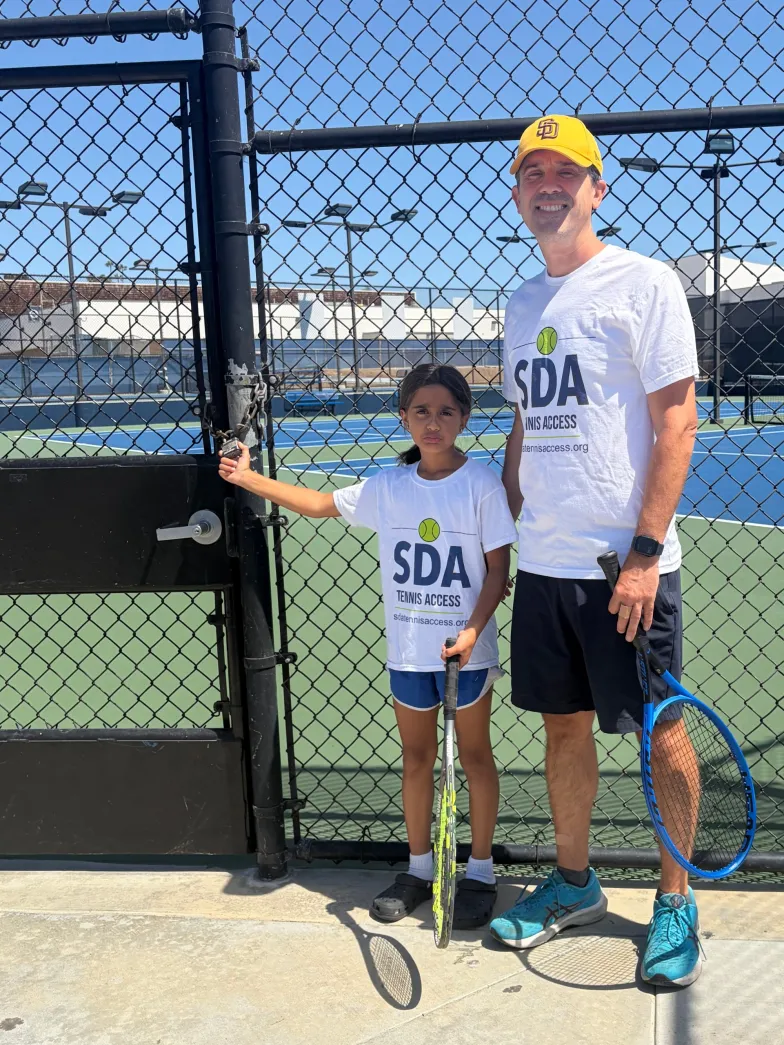
The Access Log documents a repeated missed opportunity: beautiful courts sitting empty when a school-first agreement could allow residents to play.

Let’s work together with the City of Encinitas and SDUHSD to open these courts up! The agreement models already exist. Now we need enough community support to help make it happen.

Latest update

The courts are still locked. The solution is still right there.

Another update from the San Dieguito Academy public school courts. Beautiful courts should not sit unused when proven city-school agreements already show a path to school-first public access.

Watch on YouTube

Earlier updates

The idea

Support a controlled joint-use pilot at SDA.

The idea is simple: increase community access to the SDA tennis courts during non-school hours through a formal agreement between San Dieguito Union High School District and the City of Encinitas.

This does not open the entire campus. It uses one specific court area as a controlled joint-use pilot site, preserves school use, and limits public access to appropriate times.

Why this site

SDA is well-positioned for limited public access.

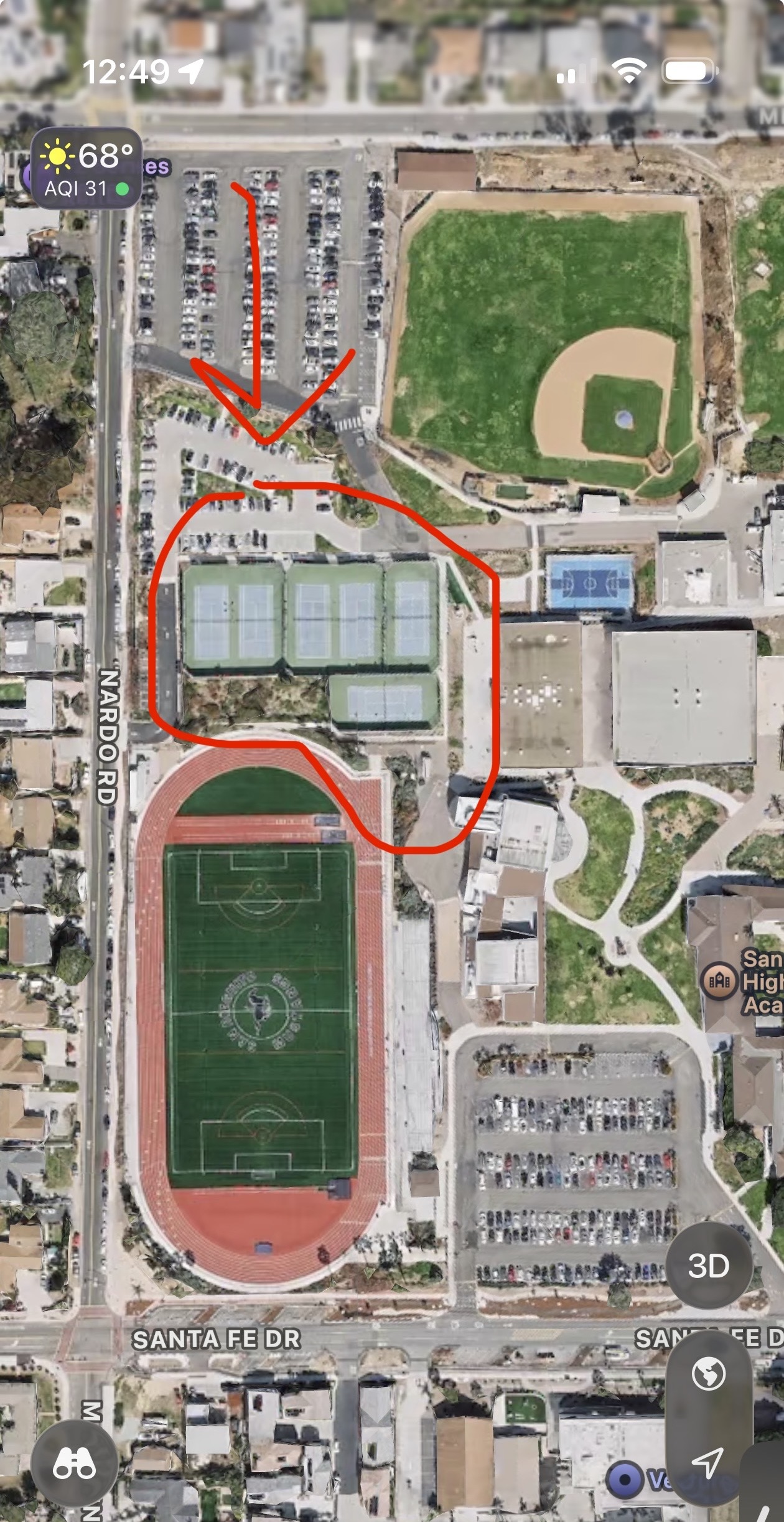
SDA is a strong candidate because the tennis courts are located near the edge of campus and are directly accessible from the street. Public use does not require people to walk through the school campus, classroom areas, or interior student spaces.

That layout separates SDA from schools where courts or fields sit deep inside campus.

Aerial map showing the SDA tennis courts near Nardo Road and the edge of campus
The courts sit along the campus edge, near public street access. That makes the site worth evaluating as a possible joint-use pilot.

Nearby examples

I’ve done the work! This does not require inventing a new model.

Nearby cities and school districts already use joint-use agreements to make school recreational facilities, including high school tennis courts, available to the public while preserving school use and addressing maintenance, liability, scheduling, and security.

The examples below show that this is practical, specific, and already happening nearby.

Mission Bay High School / City of San Diego

School use is preserved during school hours; city/community recreation use is allowed after school, on weekends, holidays, and other non-school days.

Tennis courts Maintenance Insurance Gate responsibilities
Download agreement

Carlsbad Unified / City of Carlsbad

The city and district have had a community recreation arrangement since 1989. The current agreement includes Carlsbad High School tennis courts.

Public use hours School priority Routine maintenance Reservations
Download agreement

What agreements solve

The hard parts belong in the agreement.

Other districts already allow access. Formal joint-use agreements assign responsibility for the operational details that matter.

This effort is not just a complaint. It is researched, solution-oriented advocacy: school priority, public hours, gates, maintenance, and liability all belong in a clear operating plan.

  • School priority and blackout periods
  • Public access hours
  • Scheduling and reservations
  • Routine maintenance
  • Cleanup
  • Gate opening and closing
  • Insurance
  • Liability and indemnity
  • Cost sharing or city maintenance responsibilities
  • Coordination between district and city staff

Next step

Build enough support to make this happen.

The model already exists. I have done the research and found real city-school agreements that show how school-first public access works. Now we need enough residents asking SDUHSD and the City of Encinitas to work with us on a local agreement.

  • Show officials the existing agreement documents
  • Build awareness and critical mass
  • Ask the City and SDUHSD to negotiate from proven examples
  • Keep school and team use first
  • Set public access hours
  • Put gates, cleanup, maintenance, insurance, and liability in the agreement

Current focus

Turn a proven idea into local action.

This page has two jobs: give officials the research, evidence, and solutions needed to draft an agreement, and build enough community awareness for the City and SDUHSD to move forward with confidence.

The feedback so far has been positive. The challenge is not convincing people that public access is bad; it is showing enough community momentum for officials to believe this is possible and worth doing.

The documents are here for staff, trustees, and council members. The signup list is for residents who want to stay informed, speak constructively, attend meetings, and show visible support for access.

FAQ

Common questions

The goal is a practical, limited pilot that expands public recreation access while preserving school priority and addressing operations directly.

What exactly is being requested?

The request asks SDUHSD and the City of Encinitas to negotiate a limited joint-use pilot for public tennis access during non-school hours. The examples on this page show how other city-school agreements handle operations, costs, liability, access, and scheduling.

Would this open the whole campus?

No. The proposal is limited to the tennis court area. SDA is a strong candidate because the courts sit near the edge of campus and can be reached from the street without opening classroom areas or interior student spaces.

Would school use still come first?

Yes. School use, team use, tournaments, maintenance, and blackout dates come first. Public access only occurs during appropriate non-school hours under rules defined in a formal agreement.

Why should the City of Encinitas be involved?

Parks and Recreation departments exist to provide public recreation access. Encinitas has very limited city park tennis capacity. A joint-use pilot expands public tennis access by using existing courts instead of requiring the city to acquire land or build new courts from scratch.

Who would pay for this?

A pilot evaluation answers that question. Nearby city-school models show that joint-use agreements can handle operations, maintenance, gates, security, and cost-sharing. The likely path is a city-district partnership where Parks and Recreation helps fund or operate the public-access portion.

What about gates, locks, and security?

These are normal joint-use issues, not reasons to stop the conversation. San Diego joint-use materials describe practical gate procedures involving school custodial staff, city operations, and security contractors. A local pilot needs a clear plan for who opens, closes, and secures the courts.

What about maintenance and resurfacing?

The agreement should spell out maintenance responsibilities. San Diego records show real examples of tennis court maintenance and reimbursement handled through joint-use arrangements. A pilot should identify expected maintenance costs and who covers them.

What about liability?

Liability is one of the main reasons to use a formal joint-use agreement. Nearby models allocate responsibility between the city and district instead of leaving access informal or unclear. The goal is to define responsibility before public access begins.

Are high schools different?

High schools can be more complicated because of athletics, events, and campus security. But they are not automatically impossible. City of San Diego materials include Mission Bay High School as a direct high-school joint-use agreement, and Canyon Hills High School as another high-school example with tennis courts in the joint-use area. SDA deserves evaluation based on its specific layout and operating conditions.

Why not just use the current rental process?

The current rental process is not realistic public access for ordinary residents. Do you have a $1 million liability policy ready for a casual tennis match? Most people do not. A model built around high fees, insurance requirements, and custodial charges mainly works for organizations, camps, and formal rentals. The goal is practical public recreation access.

What about neighbors, noise, and parking?

A pilot can include limited hours, posted rules, no amplified sound, complaint contacts, and other site-specific restrictions. The operating plan should address these concerns instead of treating them as reasons to make access impossible.

How can community members help?

Sign up, share your interest in public tennis access, and be ready to contact officials or attend City Council and school board meetings. The goal is to build enough awareness and constructive community support for the city and district to move forward.
Get involved

Help increase access to SDA tennis courts.

I’ve done the research. I need your help showing that residents want action.

Sign up if you want updates, can help spread awareness, or are willing to show constructive support at public meetings.

I would like to

Please reach out directly to jeffrey.sherin@gmail.com for additional information.

About this site

A constructive local resource.

This site is maintained by Jeff Sherin, a Cardiff resident and SDA parent advocating for practical community access to public recreational facilities during non-school hours.

The goal is to support a constructive conversation among SDUHSD, the City of Encinitas, and community members.